Silence of the Antagonist: How Cinema Lost the Art of Letting Villains Speak
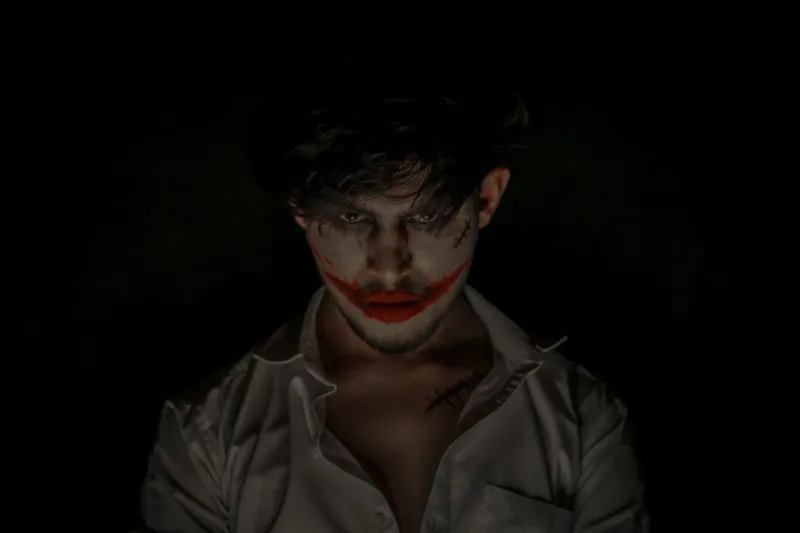
There is a particular kind of dread that only a truly eloquent villain can produce. It is not the dread of a raised weapon or an approaching threat — it is the far more unsettling discomfort of finding yourself, against every rational instinct, nodding along. When Hannibal Lecter speaks in The Silence of the Lambs, or when Colonel Kurtz murmurs into the darkness of Apocalypse Now, the audience is not merely watching a scene unfold. They are being implicated in a worldview they did not consent to enter. That experience — philosophically disorienting, narratively electric — has become increasingly rare in contemporary American cinema.
The villain monologue, once a defining instrument of dramatic tension, has been quietly retired from mainstream filmmaking. In its place: clipped exchanges, implied menace, and antagonists who communicate through action rather than argument. Whether this represents a refinement of the craft or a meaningful diminishment of it is a question worth examining carefully.
What the Monologue Actually Did
To understand what has been lost, it helps to clarify what the villain monologue was never really about. The popular caricature — the supervillain pausing to explain his entire plan before the hero escapes — misrepresents a tradition that, at its best, served profound narrative purposes.
Consider Anton Chigurh in No Country for Old Men (2007). His conversations with prospective victims are not expository delays; they are philosophical confrontations. When he presents a coin toss as a matter of cosmic significance, the Coen Brothers use his monologue to articulate an entire moral framework — one built on fatalism, inevitability, and the indifference of the universe. The audience leaves those scenes not merely frightened of Chigurh but genuinely unsettled by the ideas he represents. The speech does the work that a hundred action sequences could not.
Or consider Hans Landa in Inglourious Basterds (2009), whose opening dairy farm interrogation remains one of the most tension-laden sequences in recent American cinema. Landa's verbose, almost theatrical manner of speaking is itself the weapon. Tarantino understood that giving a villain language — real, sophisticated, seductive language — is more frightening than giving him a gun.
The monologue, when executed with craft, achieves three things simultaneously: it characterizes the antagonist beyond their function as an obstacle, it articulates the film's thematic concerns through a voice that challenges the protagonist's worldview, and it forces the audience into an active rather than passive relationship with the narrative.
The Shift Toward Fragmentation
Modern studio filmmaking has moved in a markedly different direction. The pressures of franchise storytelling, accelerated editing rhythms, and audience engagement metrics have collectively shortened the breath of contemporary antagonists.
Look at the Marvel Cinematic Universe, which has produced some of the most commercially successful films in American history alongside some of its most dramatically underdeveloped villains. Ronan the Accuser in Guardians of the Galaxy, Malekith in Thor: The Dark World, and Yellowjacket in Ant-Man are frequently cited as examples of antagonists who exist almost entirely as plot mechanisms. They are defined by what they want, not by how they think. The camera rarely lingers long enough to let them argue for their own perspective.
Thanos, the franchise's most prominent antagonist, is a partial exception — and it is telling that his moments of greatest dramatic weight come precisely when the films allow him to speak at length. His conversation with a young Gamora, or his exchange with Doctor Strange on Titan, derive their power from the same source as the classic monologue: the audience is made to understand, if not accept, the logic of his convictions.
But these moments are exceptions within a broader pattern. Even Thanos is ultimately more defined by spectacle than by speech.
The Industry Rationale
The reasons for this shift are not difficult to identify. Franchise filmmaking demands that antagonists function across multiple installments, which discourages the kind of singular, fully-articulated villainy that a standalone narrative can sustain. A villain who delivers a definitive philosophical statement in film one has, in some sense, already been completed — which creates structural problems for sequels.
Beyond franchise logic, contemporary editing culture has compressed the acceptable duration of any single scene. The average shot length in Hollywood films has decreased dramatically since the 1970s, and extended dialogue sequences — particularly those featuring a single character speaking at length — are increasingly perceived as pacing liabilities by studios nervous about audience retention.
There is also a legitimate craft argument on the other side. Some filmmakers have argued that the classic monologue too often shaded into self-parody, that a villain who explains himself too completely becomes less threatening rather than more. The restraint of a character like Anton Chigurh — who speaks, but never quite explains — might be seen as a more sophisticated evolution of the tradition.
What Gets Lost in the Silence
The counterargument, however, carries considerable weight. When antagonists are not permitted to articulate their worldview, films forfeit one of their most powerful tools for thematic complexity. The best villain speeches are not about the villain — they are about the film's central argument, delivered from the opposing side.
In Network (1976), Arthur Jensen's boardroom lecture to Howard Beale is one of cinema's great villain monologues precisely because it is also one of cinema's great articulations of corporate ideology. The speech frightens not because Jensen is monstrous, but because his logic is coherent. The audience is made to feel the seductive pull of a worldview they should resist.
Contemporary films rarely create that experience. When antagonists are defined by action alone, the moral and philosophical stakes of the conflict flatten. The hero is not overcoming an argument — they are overcoming an obstacle. That is a less interesting story.
There are signs that some filmmakers recognize this. Oppenheimer (2023) gave Lewis Strauss a slow-burn ideological portrait that functions as a distributed monologue across the film's runtime. Killers of the Flower Moon (2023) allowed William Hale's menace to accumulate through conversation and implication. These are not traditional villain speeches, but they reflect a similar understanding: that antagonists who think on screen are more compelling than antagonists who simply act.
The Frame That Holds the Villain
At Cleocina, we believe that every frame tells a story — and the frame that holds a villain in the act of speaking is one of cinema's most potent compositions. It asks the audience to listen, to engage, to resist or be persuaded. It treats the viewer as an active participant in the moral drama unfolding on screen.
The abandonment of the extended antagonist voice is not merely a stylistic shift. It reflects a broader contraction in the ambition of mainstream American cinema — a preference for clarity over complexity, for momentum over meaning. The films that endure, that accumulate cultural resonance across decades, tend to be the ones that trusted their villains to speak.
The monologue is not a relic. It is a discipline. And its absence is felt most acutely in the films that seem to have forgotten why it existed in the first place.